

In a new video in the Abidjan Principles in Practice series, Johnstone Shisanya, Education Support Programme Manager at East African Centre for Human Rights (EACHRights) explains how EACHRights is using the Abidjan Principles to advocate for the human right to education for all and the document’s importance.
Turning the Abidjan Principles into Practice in Brazil
The case of Brazil offers an excellent example of how the Abidjan Principles can be used by civil society to influence national education policy and regulatory processes.
In a new video in the Abidjan Principles in Practice series, Andressa Pellanda, General Coordinator at the Brazilian Campaign for the Right to Education (BCRE), explains how in 2022 BCRE used the Abidjan Principles to push for stronger regulations on private actors in education, “arguing that private sector involvement cannot be a quick fix for inequality as it can and does deepen inequalities”. This contributed to a “major victory” in 2024: the National Conference on Education endorsed the expansion of “private and community education regulation”.
Abidjan Principles 6th Anniversary: Unpacking the Legal Foundations and Justifications
To commemorate the 6th Anniversary of the Abidjan Principles, a special event was held on 20 February 2025, bringing together prominent experts who delved into the legal foundations and ongoing relevance of the Principles in realising the right to free, quality and inclusive education for all. This event also provided an opportunity to showcase several legal commentaries that have been published since 2023 by the Oxford Human Rights Hub.
The event, co-moderated by Aya Douabou, Programme Officer – Africa at GI-ESCR, and Ashina Mtsumi, Coordinator for the TaxEd Alliance, welcomed 36 participants, and focused on the following Guiding Principles Commentaries:
Scope, application and interpretation (Guiding Principles 1 and 4-7)
Right to public education (Guiding Principles 29-33)
Resources and financing public education, governance and non-retrogression (Guiding Principles 15, 16, 34-37, 39-41 and 42-45)
Obligations to Respect, Protect, and Fulfil the Right to Education in the Context of Private Involvement (Guiding Principles 47-48)
Implementation of the Guiding Principles (Guiding Principles 91-97)
The event featured insightful contributions from Meghan Campbell, Deputy-Director of the Oxford Human Rights Hub, Jacqueline Mowbray, Associate Professor at the University of Sydney's Law School, Dr Perekeme Mutu, Research Assistant Faculty of Law, University of Pretoria, Dr Maria Ron Balsera, Executive Director, Center for Economic and Social Rights (CESR) and Dr Roman Zinigrad, Assistant Professor of Law at the American University of Paris.
Designed for a broad audience –including civil society organisations, educational planners, policymakers, human rights advocates, UN agencies, development partners and other stakeholders at national and international levels–, this event provided an invaluable opportunity for those committed to understanding and advancing the right to education globally.
East African Centre for Human Rights and the Kenyan Ministry of Education collaborative project draws on the Abidjan Principles
Abidjan Principles 5th anniversary: celebrating 5 years of progress on the right to education

On 13 February 2024, international experts, academics, education stakeholders and representatives of regional and international human rights systems gathered to celebrate five years since the adoption of the Abidjan principles, a reference text and rapidly recognised authoritative resource on the right to education.
Nepal: ICJ co-hosts online refresher training on the right to education

The International Commission of Jurists (ICJ) in collaboration with ESCR National Network Nepal, Justice & Research Institute (JuRI Nepal), PIL Lawyers Group- Nepalgunj and the Privatization in Education & Human Rights Consortium (PEHRC) held an online training on right to education for the Nepali lawyers.
Brazilian National Education Conference references the Abidjan Principles
The Brazilian Campaign for the Right to Education (BCRE), is actively participating in the formulation of the new National Education Plan (PNE) for the next decade and contributed to the organisation of the National Education Conference (CONAE) 2024, which took place between January 28 and January 30, 2024…
Abidjan Principles 5th Anniversary: Celebrating 5 Years of Progress on the Right to Education
Five years have passed since the Abidjan Principles (APs) were adopted on the 13th of February, 2019, in Abidjan, Côte d’Ivoire to explain States’ existing legal obligations concerning the delivery of education. Since then, they have been recognised by multiple legal institutions and human rights bodies…
73 states make joint declaration on academic freedom which references the Abidjan Principles
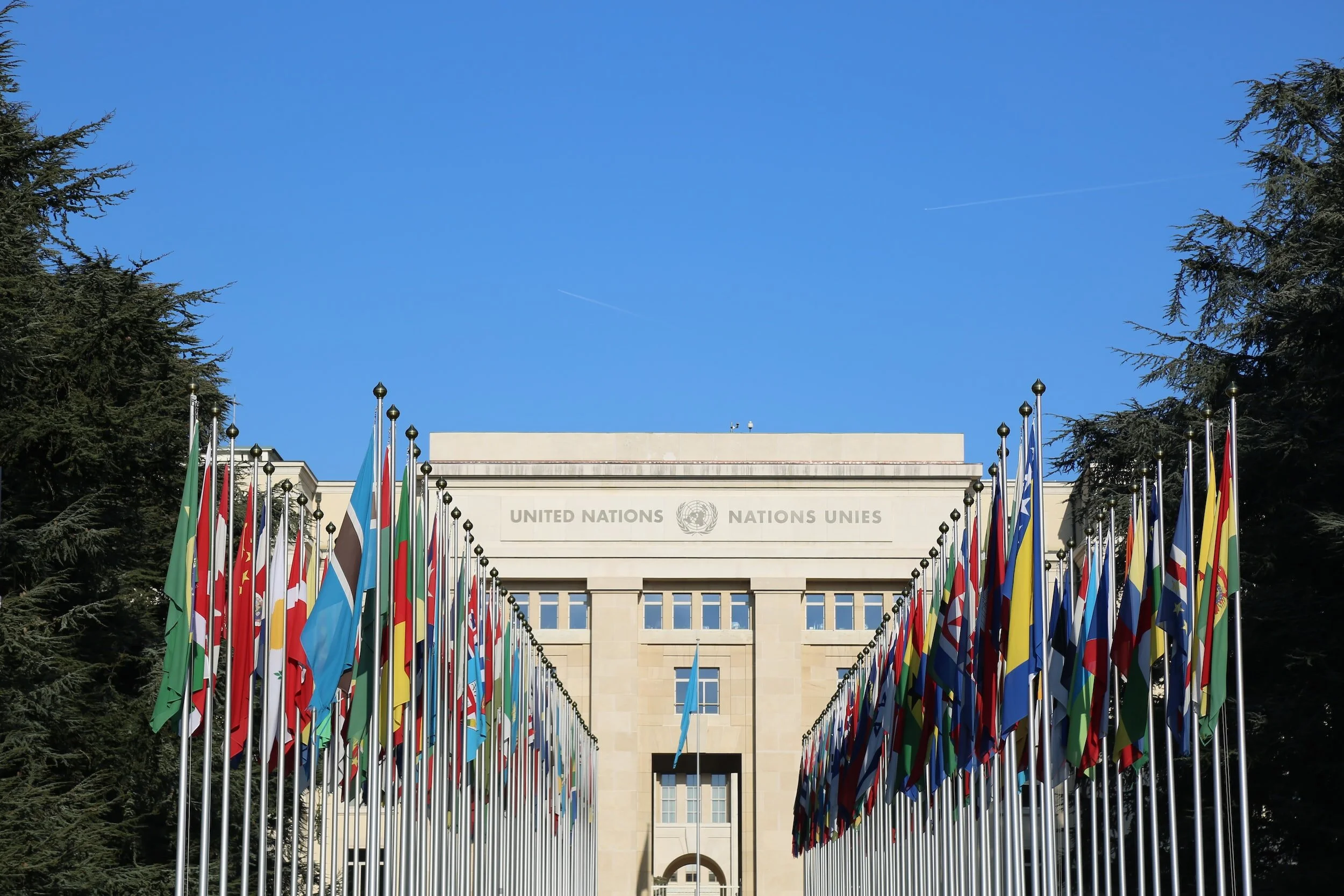
The 52nd session of the United Nations Human Rights Council, held in Geneva between 27 February - 4 April 2023, saw the presentation of a joint statement on academic freedom by France on behalf of 72 additional countries. The statement reaffirms the vital importance of academic freedom and calls on all states to protect and promote it as a cornerstone of democracy and human rights. The joint statement specifically references the Abidjan Principles.
Tashkent Declaration on Early Childhood Care and Education (ECCE) adopted in November 2022 recognises the relevance of Abidjan Principles
Adopted during the second UNESCO World Conference on Early Childhood Care and Education (WCECCE) on 16 November 2022, the Tashkent Declaration and Commitments to Action for Transforming Early Childhood Care and Education refers to the Abidjan Principles on the human rights obligations of States to provide public education and to regulate private involvement in education (hereafter: Abidjan Principles) in the list of ‘ pioneering international and regional initiatives and statements’ applying to ECCE (para. 8).
Can profit-making in education be justified? Celebrating the Abidjan Principles Third Anniversary
Celebrating the Abidjan Principles’ Second Anniversary | EVENT & NEW VIDEO SERIES

To celebrate the 2nd anniversary of the Abidjan Principles which have become the worldwide reference text on the right to education, we are releasing a five-video series explaining what the Abidjan Principles are, entail, how they can be implemented and by whom. The series culminates with an animation video that we will launch on 12 February, as we hold our celebratory event which we hope you join!
Celebrating the Achievements from the First Year of the Abidjan Principles

(Paris, 13 February 2019) As today marks the first anniversary of the adoption of the Abidjan Principles on the right to education organisations around the world are celebrating the significant renewed momentum for the right to education that developed in just a year.
The Abidjan Principles receive recognition from the Special Rapporteurship on Economic, Social, Cultural and Environmental Rights of the Organisation of American States (OAS)

Abidjan Principles on the right to education awarded support by the Paris Peace Forum 2019 as one of the most promising governance projects

Drafting committee welcomes the recognition of the Abidjan Principles by the United Nations Human Rights Council
African Commission on Human and Peoples’ Rights adopts landmark resolution on privatisation of education and health and recognises the Abidjan Principles
Landmark Abidjan Principles on the right to education published on Thursday 21st March
Abidjan’s Roadmap for Free and Quality Public Education
New landmark Abidjan Principles on the right to education and private actors adopted by experts
(13 February 2019, Abidjan, Côte d’Ivoire): A group of human rights experts from around the world adopted the Abidjan Principles on the right to education today, following three years of consultations, reflection and drafting. The Abidjan Principles seek to strengthen existing efforts to ensure that everyone’s right to education is protected in the context of growing, and often unregulated private actor involvement in education.